(813) 402-8384

Lun. - Vie. 8:00 Am - 5:00 Pm

image_a9f17bb1

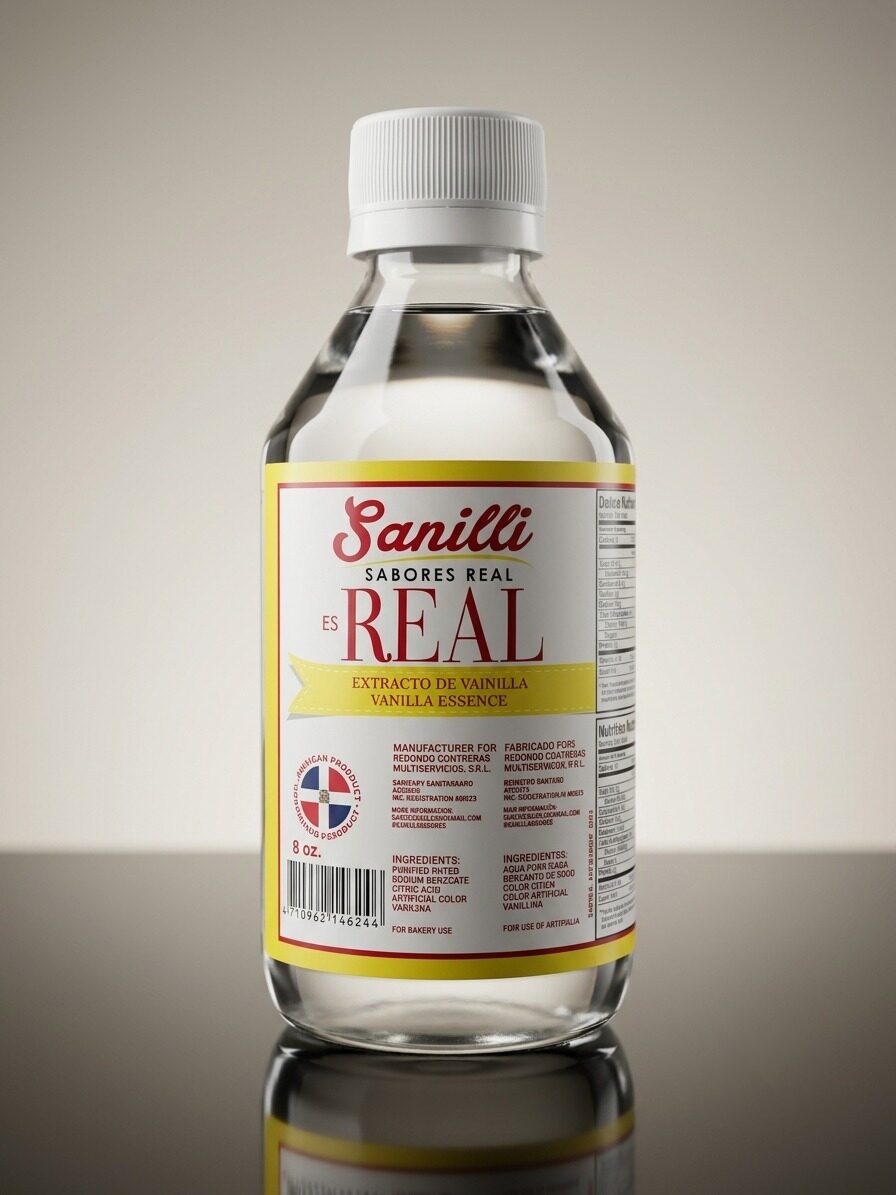
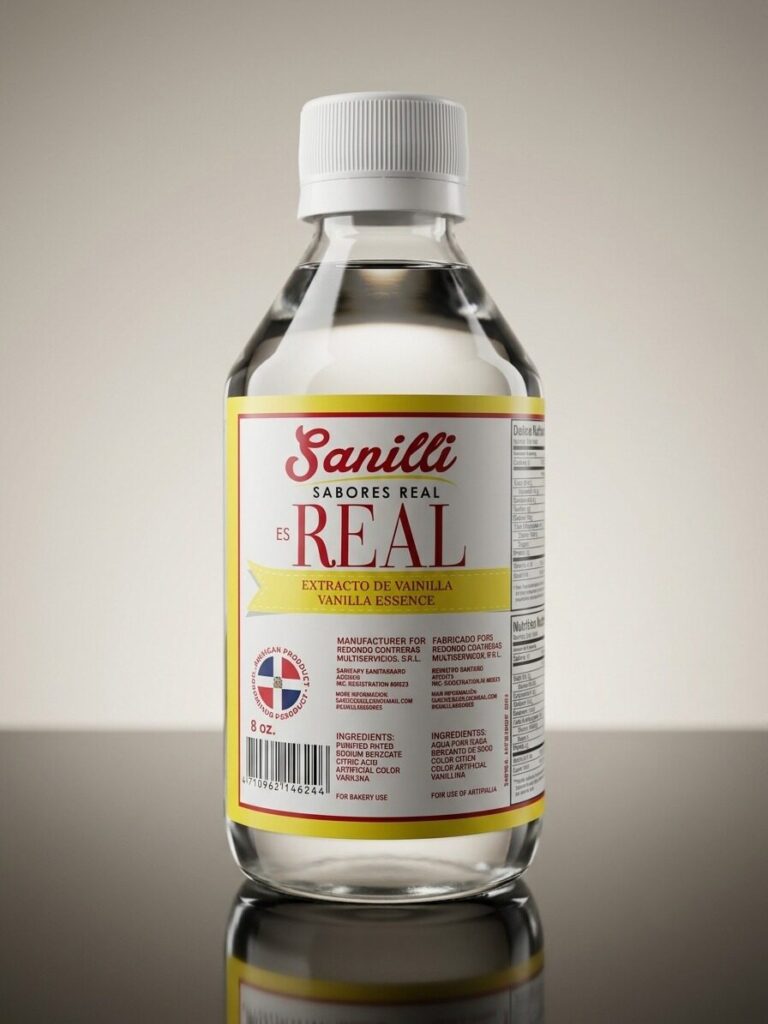
Descubre el secreto para preparar postres irresistibles con el Extracto de Vainilla Sanilli, un ingrediente ideal para transformar tus recetas en creaciones llenas de sabor y aroma. Procedente de la República Dominicana, este extracto ofrece un perfil aromático intenso y característico que complementa una amplia variedad de preparaciones, desde pasteles y galletas hasta cremas, flanes y otros postres .

Realza tus creaciones culinarias con el Extracto de
Vainilla Sanilli.

Versatilidad en la cocina: Disponible en dos práctica presentaciones de 237 ml (8 oz) y 113 ml (4 oz) son una excelente opción tanto para la repostería casera como para pequeñas cocinas comerciales.
Versatilidad en la cocina: El tamaño de nuestro extracto es ideal tanto para los aficionados a la repostería casera como para las necesidades de pequeñas cocinas comerciales. Su diseño con tapa amarilla facilita la dosificación y el almacenamiento, garantizando una experiencia culinaria sin complicaciones.
Calidad y frescura: La calidad es una prioridad. Cada botella cuenta con una fecha de caducidad claramente identificada, para que puedas verificar la vigencia del producto antes de utilizarlo.

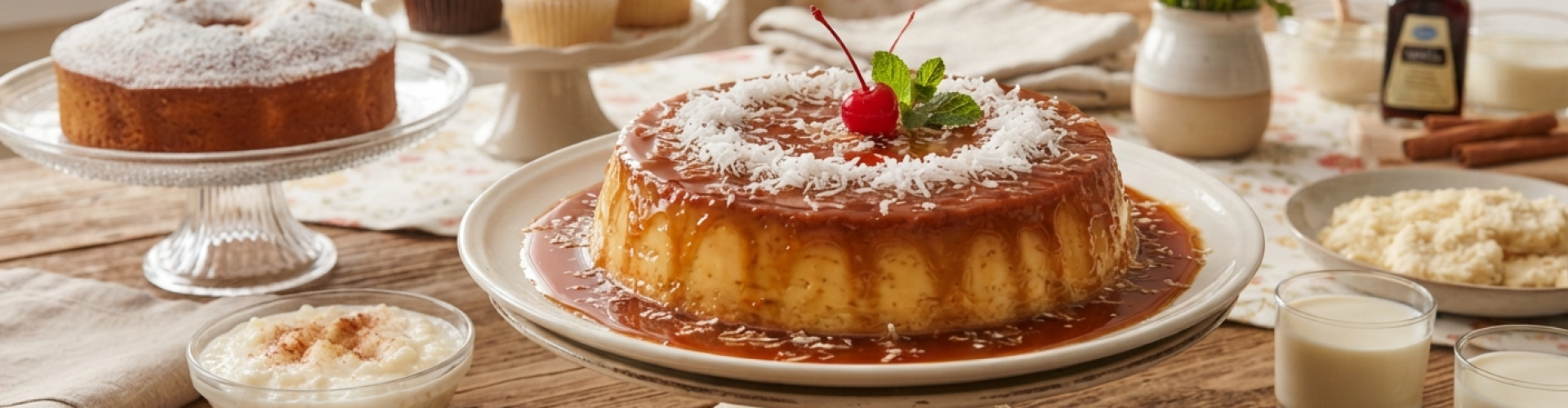
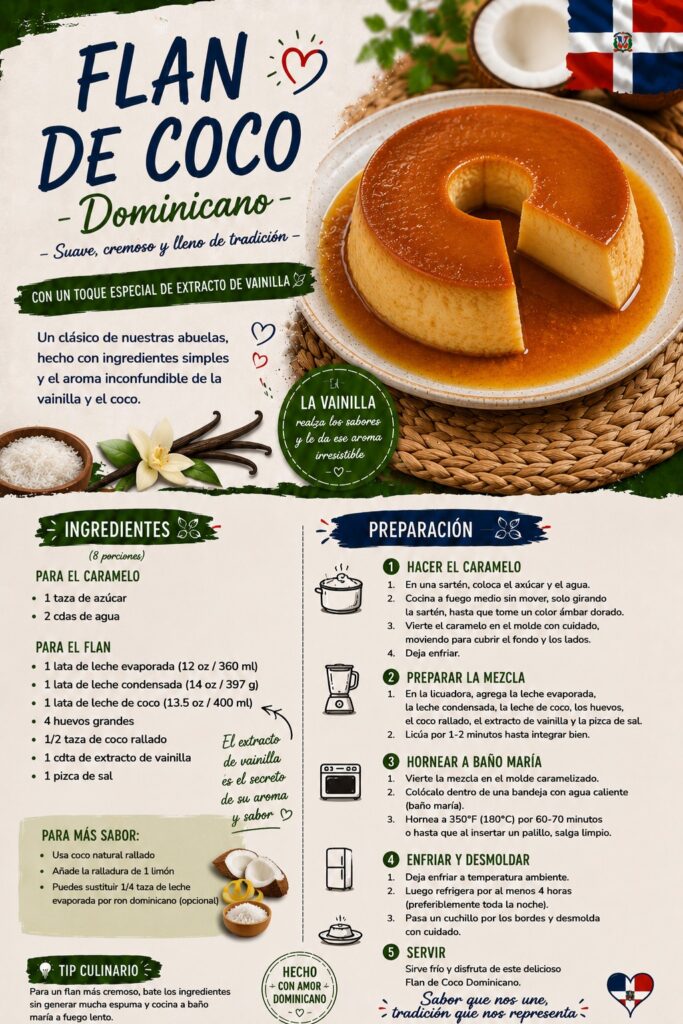
Flan de Coco Dominicano con Extracto de Vainilla

Para el caramelo

  • 1 taza de azúcar
  • 2 cucharadas de agua

Para el flan — 8 porciones

  • 1 lata (397 g) de leche condensada azucarada
  • 1 lata (360 ml) de leche evaporada
  • 1 lata (400 ml) de leche de coco
  • 4 huevos grandes
  • ½ taza de coco rallado
  • 1 cucharada de extracto de vainilla
  • 1 pizca de sal

Preparar el caramelo

• Coloca el azúcar y el agua en una cacerola o sartén.
• Cocina a fuego medio sin remover, girando suavemente la cacerola cuando sea necesario.
• Cuando el azúcar adquiera un color ámbar intenso, vierte inmediatamente el caramelo en el molde para flan.
• Gira el molde con cuidado para cubrir completamente el fondo y parte de los lados.

Prepara la mezcla para el flan.

• En un recipiente grande, combina la leche condensada, la leche evaporada, la leche de coco, los huevos, el coco rallado, el extracto de vainilla y la pizca de sal.
• Mezcla hasta obtener una preparación uniforme.
• Leche de coco
• Huevos
• Coco rallado
• Estracto de vainilla
• Una pizca de sal
Hornear

• Vierte la mezcla en el molde previamente cubierto con caramelo.
• Coloca el molde dentro de una bandeja para hornear más grande. Llena la bandeja exterior con agua caliente hasta alcanzar aproximadamente la mitad de la altura del molde para crear un baño María.
• Hornea a 180 °C (350 °F) durante 60 a 70 minutos, o hasta que el centro esté firme y al insertar un cuchillo este salga limpio.

Enfriar

• Retira el flan del horno y déjalo enfriar completamente a temperatura ambiente.
• Refrigéralo durante al menos 4 horas, preferiblemente durante toda la noche.

Servir

• Pasa cuidadosamente un cuchillo por los bordes del molde.
• Coloca un plato sobre el molde e inviértelo con cuidado para desmoldar el flan.
• Decora con coco rallado tostado o ralladura de lima, si lo deseas. Sirve frío.

Para un sabor extra

• Añade ralladura de lima o naranja para incorporar un aroma cítrico.
• Para una versión para adultos, puedes sustituir ¼ de taza de leche evaporada por ron dominicano.
• Espolvorea una pequeña cantidad de canela molida antes de servir.
• Decora con coco tostado para aportar una deliciosa textura crujiente.

Consejo culinario

Utiliza un extracto de vainilla de buena calidad e incorpóralo junto con los ingredientes líquidos para distribuirlo uniformemente en la mezcla. Su aroma combina especialmente bien con el coco y el caramelo, aportando profundidad y equilibrio al sabor de este tradicional flan de coco dominicano.

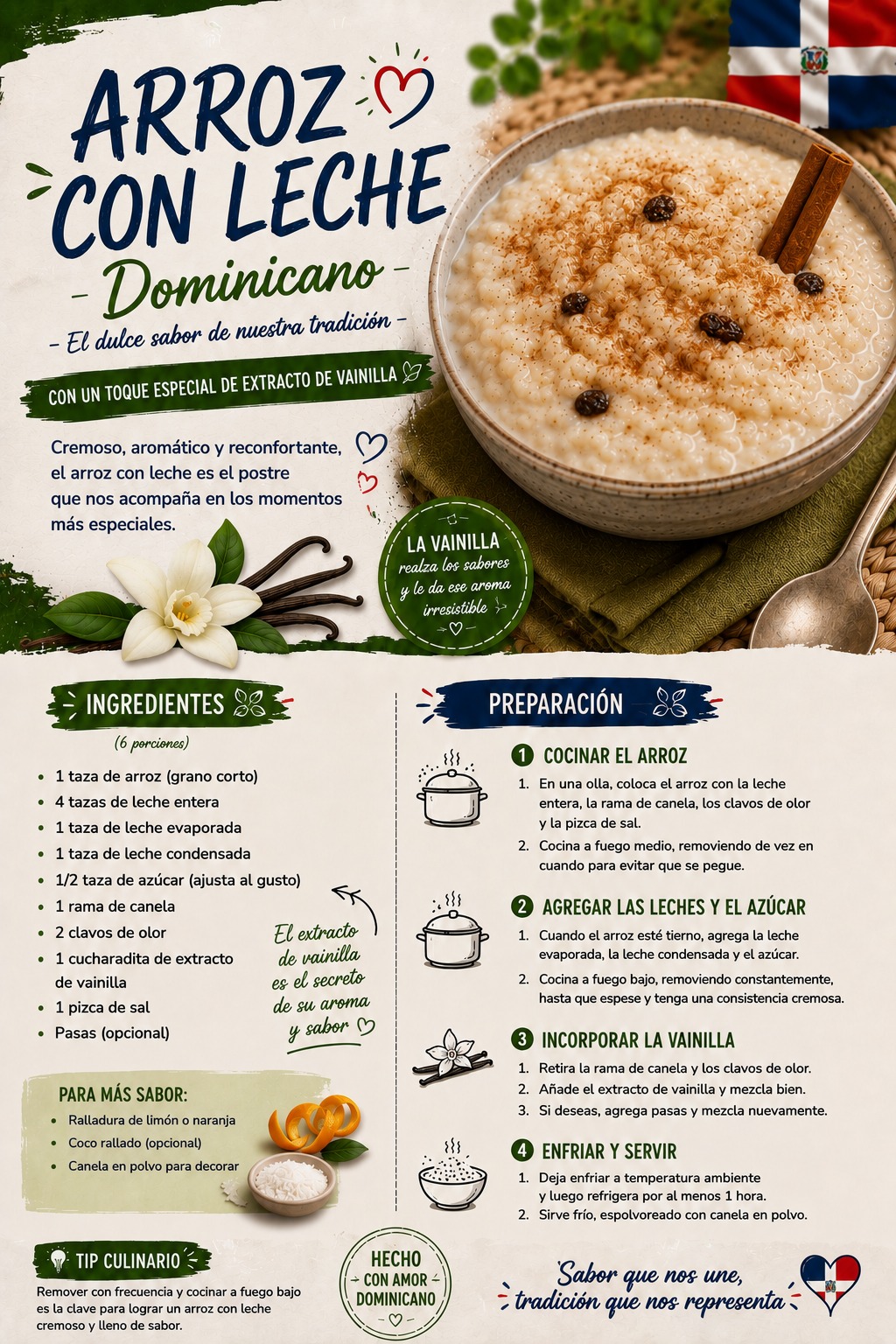
Arroz con leche dominicano

Resumen de la receta

• Rinde: 6 porciones
• Preparación: 10 minutos
• Cocción: 40 minutos
• Tiempo total: 50 minutos

Ingredientes

• 1 taza de arroz blanco de grano corto
• 4 tazas de leche entera
• 1 taza de leche evaporada
• 1 taza de leche condensada azucarada
• ½ taza de azúcar, ajustable al gusto
• 1 cucharadita de extracto de vainilla, 1 rama de canela
• 3 clavos de olor enteros
• 1 tira de cáscara de lima, opcional
• 1 pizca de sal
• ¼ de taza de pasas, opcional
• Canela molida para decorar
• Ramas de canela para decorar, opcional


Preparación

• Cocinar el arroz
• En una olla grande, combina el arroz, la leche entera, la rama de canela, los clavos de olor, la cáscara de lima y una pizca de sal.
• Cocina a fuego medio durante 25 a 30 minutos, revolviendo ocasionalmente, hasta que el arroz esté tierno.

Incorporar las leches

• Añade la leche evaporada.
• Incorpora la leche condensada y el azúcar.
• Reduce el fuego y cocina durante 10 a 15 minutos, revolviendo con frecuencia para evitar que la mezcla se pegue al fondo de la olla.

Añadir el extracto de vainilla

• Retira la rama de canela, los clavos de olor y la cáscara de lima.
• Incorpora el extracto de vainilla.
• Añade las pasas, si deseas utilizarlas.
• Cocina durante 2 minutos más, mezclando suavemente para integrar todos los sabores.

Enfriar y servir

• Retira la olla del fuego y deja reposar el arroz con leche durante unos minutos.
• Déjalo reposar unos minutos.
• Puedes servirlo tibio o refrigerarlo durante aproximadamente 2 horas para disfrutarlo frío y con una textura más cremosa.

Enfriar y servir

• Espolvorea la parte superior con canela molida. • Decora con una rama de canela. • Acompaña con ralladura de lima o coco rallado si deseas darle un toque tropical especial.

Para un sabor extra auténtico

• Asegúrate de utilizar extracto de vainilla pura de alta calidad. • Incorpora una cucharada de mantequilla justo al terminar la cocción para lograr una textura brillante y extra aterciopelada. • Si prefieres un arroz con leche mucho más espeso, simplemente déjalo cocer a fuego lento unos minutos más sin dejar de remover.

Consejo culinario

El extracto de vainilla debe añadirse siempre al final de la cocción, una vez que el arroz esté completamente tierno y listo. Esto evita que el calor evapore sus compuestos delicados, permitiendo conservar su aroma natural y aportar ese perfil de sabor dulce y perfectamente equilibrado que caracteriza a este clásico postre dominicano.

Somos distribuidores de productos hispanos para su negocio.

Somos distribuidores de productos hispanos para su negocio.

Contáctanos

Horario de trabajo

Created with ♥ by 3tree digital

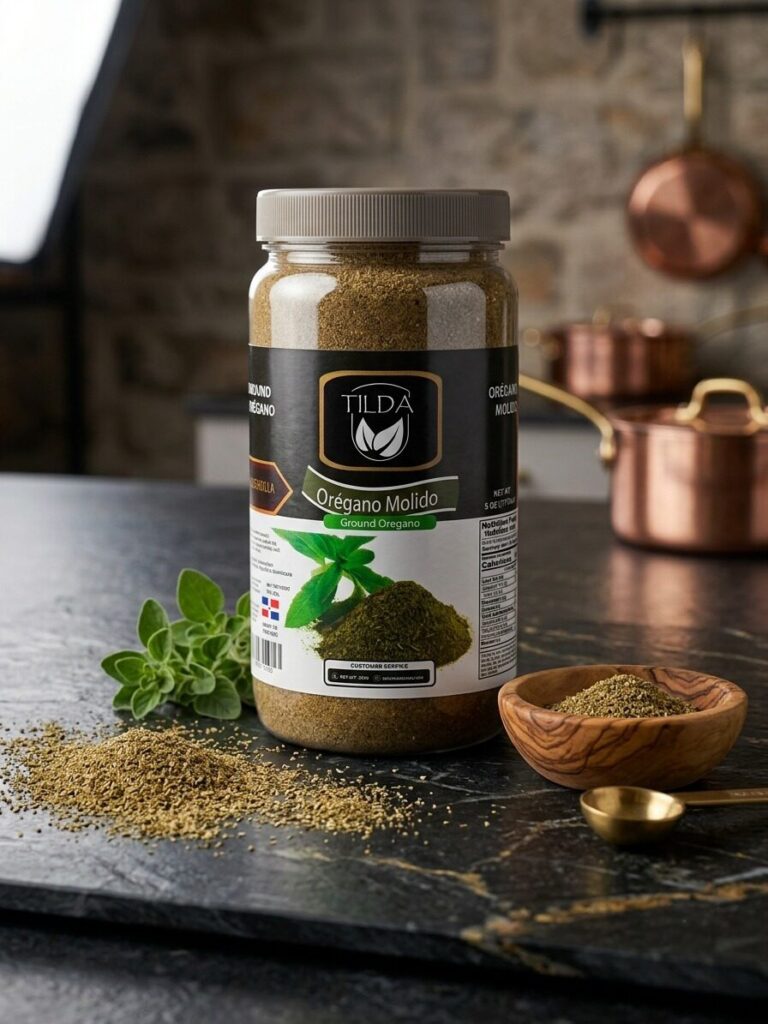
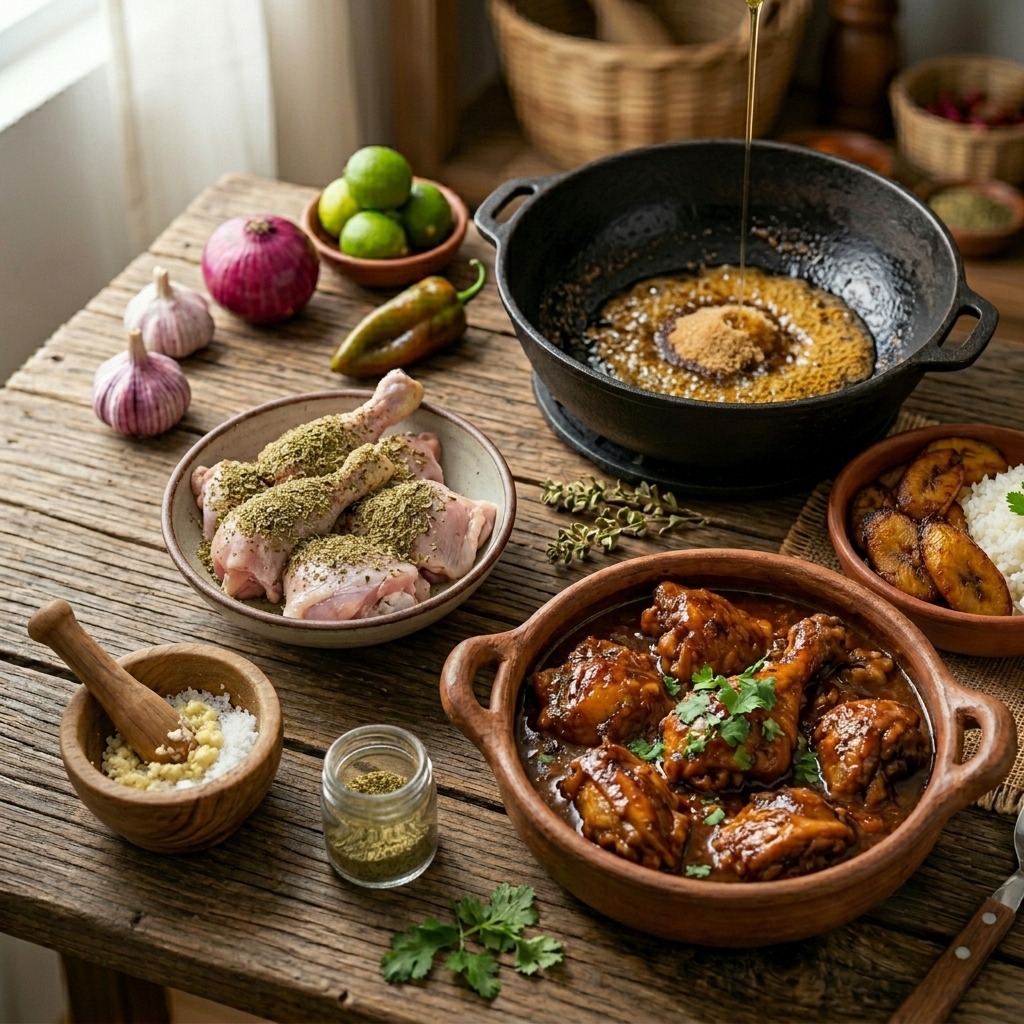
Dominican Stewed Chicken.

(Creole Seasoning) Stewed chicken is the daily lunch in any Dominican home. The characteristic touch that sets the Dominican stew apart from others in the region is the dominance of dried oregano rubbed in the hands right before cooking.

Ingredientes clave:

• 2 a 3 libras de pollo cortado en trozos.
• 1 ½ cucharadas de orégano dominicano seco.
• 1 cebolla morada y 1 pimiento verde (o pimiento cubanela), picados.
• 4 dientes de ajo, picados. Jugo de 1 lima o naranja amarga.
• 2 cucharadas de pasta de tomate. 1 cucharadita de azúcar y cilantro fresco.

Preparation:

Wash the chicken with the lime juice.
Season it by combining the garlic, salt, pepper, and most importantly, take the dried oregano in the palm of your hands and rub it over the chicken to crush it finely and activate its essential oils.
In a caldero (pot), add a splash of oil and the teaspoon of sugar. Let it caramelize until it turns a dark golden color (without letting it burn black). Add the chicken pieces.
 
vainilla

Dominican Vanilla Sponge Cake (Bizcocho Dominicano)

is a traditional dessert known for its soft, fluffy, and moist texture, infused with a delicate vanilla aroma. It is one of the most popular sweet treats for family gatherings, birthdays, and special occasions.

Ingredientes
• Wheat flour
• Butter
• Sugar
• Huevos
• Milk
• Estracto de vainilla
• Baking powder
• Salt

Instrucciones paso a paso
• Pre-heat the oven to 350°F (175°C).
• Beat the butter and sugar together until the mixture is light and creamy.
• Add the eggs one by one, then stir in the vanilla extract.
• Fold in the flour, baking powder, and salt, alternating with the milk.
• Pour the batter into a previously greased cake pan.
• Bake for 40 to 50 minutes, or until a toothpick inserted into the center comes out clean.
• Let it cool completely before removing from the pan and serving.

Dominican Mangú with Cassava Bread, Fried Cheese, and Eggs

Ingredientes
• 4 green plantains
• 1 large cassava bread (casabe)
• 2 tbsp butter
• ½ cup milk or hot water
• 1 red onion, sliced
• 2 tbsp oil
• 1 cucharada de orégano seco
• 200 g frying cheese
• 4 eggs
• Avocado (optional, for serving)

Instrucciones paso a paso• Peel the green plantains and cut them into medium-sized chunks.
• Boil them in water with salt for 20 to 25 minutes, until they are completely tender.
• Drain the plantains and reserve a small amount of the starchy cooking water.
• Mash the plantains while they are still hot, gradually adding the butter and milk (or reserved cooking water) until you achieve a creamy purée.
• In a skillet, heat the oil and sauté the red onion until it is translucent and slightly golden.
• Fry the cheese until it forms a golden crust on the outside and stays soft on the inside.
• Cook the eggs to your preference (fried, scrambled, or boiled).
• Serve a generous portion of mangú, top it with the sautéed onions, and pair it with the fried cheese, eggs, and the cassava bread broken into pieces. If desired, add a few avocado slices to complete the dish.

Dominican Mangú with Cassava Bread, Fried Cheese, and Eggs

Ingredientes

• 4 green plantains
• 1 large cassava bread (casabe)
• 2 tbsp butter
• ½ cup milk or hot water
• 1 red onion, sliced
• 2 tbsp oil
• 1 cucharada de orégano seco
• 200 g frying cheese
• 4 eggs
• Avocado (optional, for serving)

Instrucciones paso a paso

• Peel the green plantains and cut them into medium-sized chunks.
• Boil them in water with salt for 20 to 25 minutes, until they are completely tender.
• Drain the plantains and reserve a small amount of the starchy cooking water.
• Mash the plantains while they are still hot, gradually adding the butter and milk (or reserved cooking water) until you achieve a creamy purée.
• In a skillet, heat the oil and sauté the red onion until it is translucent and slightly golden.
• Fry the cheese until it forms a golden crust on the outside and stays soft on the inside.
• Cook the eggs to your preference (fried, scrambled, or boiled).
• Serve a generous portion of mangú, top it with the sautéed onions, and pair it with the fried cheese, eggs, and the cassava bread broken into pieces. If desired, add a few avocado slices to complete the dish.

Pollo Guisado Dominicano

(Creole Seasoning) Stewed chicken is the daily lunch in any Dominican home. The characteristic touch that sets the Dominican stew apart from others in the region is the dominance of dried oregano rubbed in the hands right before cooking.

Ingredientes clave:

• 2 a 3 libras de pollo cortado en trozos.
• 1 ½ cucharadas de orégano dominicano seco.
• 1 cebolla morada y 1 pimiento verde (o pimiento cubanela), picados.
• 4 dientes de ajo, picados. Jugo de 1 lima o naranja amarga.
• 2 cucharadas de pasta de tomate. 1 cucharadita de azúcar y cilantro fresco.

Preparation:

Wash the chicken with the lime juice.
Season it by combining the garlic, salt, pepper, and most importantly, take the dried oregano in the palm of your hands and rub it over the chicken to crush it finely and activate its essential oils.
In a caldero (pot), add a splash of oil and the teaspoon of sugar. Let it caramelize until it turns a dark golden color (without letting it burn black). Add the chicken pieces.


Pollo Guisado Dominicano

(Creole Seasoning) Stewed chicken is the daily lunch in any Dominican home. The characteristic touch that sets the Dominican stew apart from others in the region is the dominance of dried oregano rubbed in the hands right before cooking.

Ingredientes clave:

• 2 a 3 libras de pollo cortado en trozos.
• 1 ½ cucharadas de orégano dominicano seco.
• 1 cebolla morada y 1 pimiento verde (o pimiento cubanela), picados.
• 4 dientes de ajo, picados. Jugo de 1 lima o naranja amarga.
• 2 cucharadas de pasta de tomate. 1 cucharadita de azúcar y cilantro fresco.

Preparation:

Wash the chicken with the lime juice.
Season it by combining the garlic, salt, pepper, and most importantly, take the dried oregano in the palm of your hands and rub it over the chicken to crush it finely and activate its essential oils.
In a caldero (pot), add a splash of oil and the teaspoon of sugar. Let it caramelize until it turns a dark golden color (without letting it burn black). Add the chicken pieces.


Dominican Vanilla Sponge Cake (Bizcocho Dominicano)

is a traditional dessert known for its soft, fluffy, and moist texture, infused with a delicate vanilla aroma. It is one of the most popular sweet treats for family gatherings, birthdays, and special occasions.

Ingredientes
• Wheat flour
• Butter
• Sugar
• Huevos
• Milk
• Estracto de vainilla
• Baking powder
• Salt

Instrucciones paso a paso
• Pre-heat the oven to 350°F (175°C).
• Beat the butter and sugar together until the mixture is light and creamy.
• Add the eggs one by one, then stir in the vanilla extract.
• Fold in the flour, baking powder, and salt, alternating with the milk.
• Pour the batter into a previously greased cake pan.
• Bake for 40 to 50 minutes, or until a toothpick inserted into the center comes out clean.
• Let it cool completely before removing from the pan and serving.

Dominican Vanilla Sponge Cake (Bizcocho Dominicano)

is a traditional dessert known for its soft, fluffy, and moist texture, infused with a delicate vanilla aroma. It is one of the most popular sweet treats for family gatherings, birthdays, and special occasions.

Ingredientes
• Wheat flour
• Butter
• Sugar
• Huevos
• Milk
• Estracto de vainilla
• Baking powder
• Salt

Instrucciones paso a paso
• Pre-heat the oven to 350°F (175°C).
• Beat the butter and sugar together until the mixture is light and creamy.
• Add the eggs one by one, then stir in the vanilla extract.
• Fold in the flour, baking powder, and salt, alternating with the milk.
• Pour the batter into a previously greased cake pan.
• Bake for 40 to 50 minutes, or until a toothpick inserted into the center comes out clean.
• Let it cool completely before removing from the pan and serving.

Dominican Mangú with Cassava Bread, Fried Cheese, and Eggs

Ingredientes
• 4 green plantains
• 1 large cassava bread (casabe)
• 2 tbsp butter
• ½ cup milk or hot water
• 1 red onion, sliced
• 2 tbsp oil
• 1 cucharada de orégano seco
• 200 g frying cheese
• 4 eggs
• Avocado (optional, for serving)

Instrucciones paso a paso

• Peel the green plantains and cut them into medium-sized chunks.
• Boil them in water with salt for 20 to 25 minutes, until they are completely tender.
• Drain the plantains and reserve a small amount of the starchy cooking water.
• Mash the plantains while they are still hot, gradually adding the butter and milk (or reserved cooking water) until you achieve a creamy purée.
• In a skillet, heat the oil and sauté the red onion until it is translucent and slightly golden.
• Fry the cheese until it forms a golden crust on the outside and stays soft on the inside.
• Cook the eggs to your preference (fried, scrambled, or boiled).
• Serve a generous portion of mangú, top it with the sautéed onions, and pair it with the fried cheese, eggs, and the cassava bread broken into pieces. If desired, add a few avocado slices to complete the dish.