(813) 402-8384

Lun. - Vie. 8:00 Am - 5:00 Pm

image_199c44e7

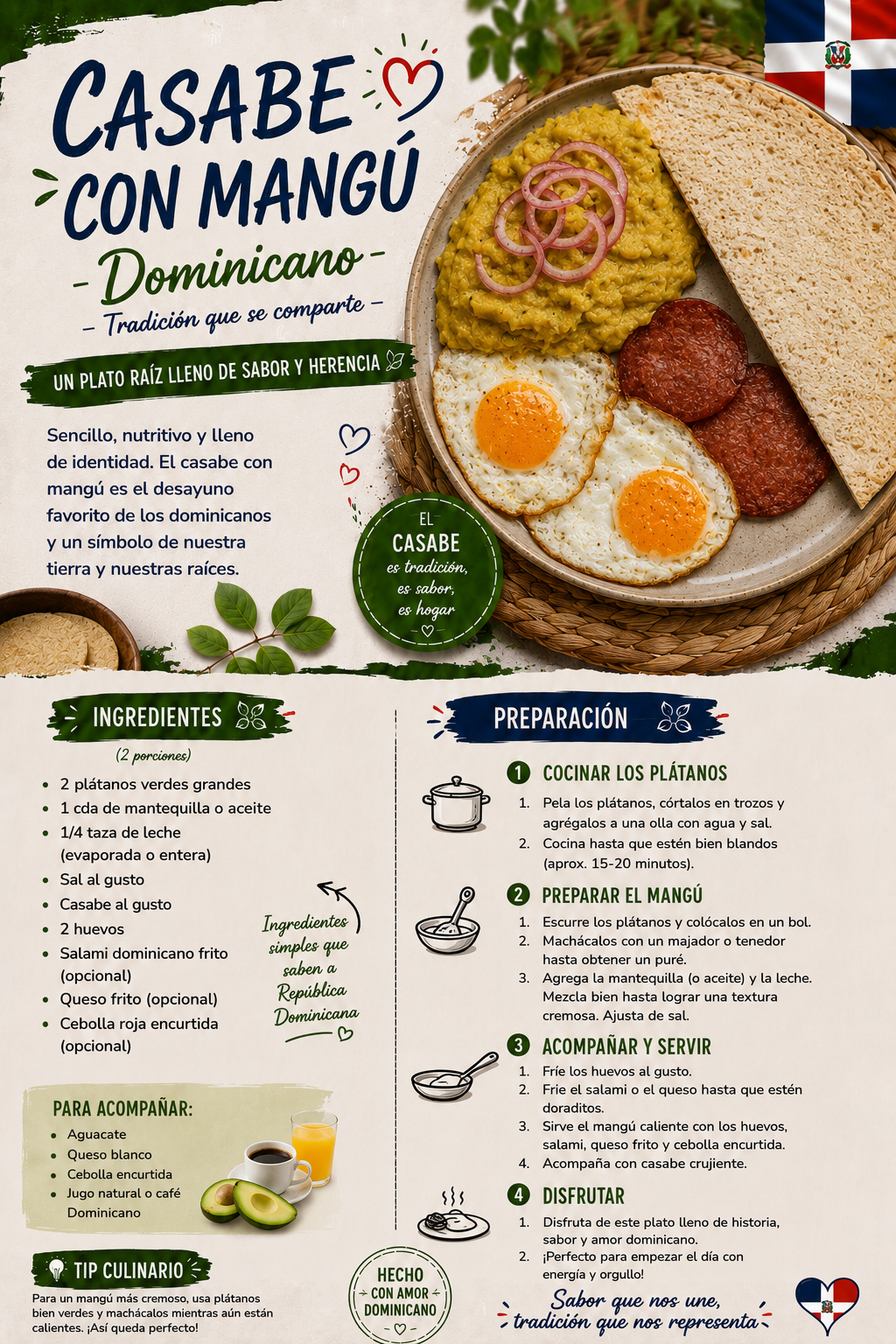
Un plato lleno de sabor y tradición. Sencillo, nutritivo y con una rica identidad cultural, el casabe con mangú combina dos elementos representativos de la gastronomía dominicana. Es ideal para el desayuno o la cena y puede acompañarse con los tradicionales “tres golpes”: huevos, salami y queso frito.

Casabe Con Mangú Dominicano

Para el Mangú:

    • 2 plátanos verdes grandes
    • 2 cucharadas de mantequilla
    • ¼ de taza de leche evaporada o leche entera
    • Sal al gusto

Para los Tres Golpes

  • 2 Huevos
  • 4 Rodajas de salami
  • 2 Rodajas de queso para freír, opcional
  • 1 Cebolla roja grande
  • 2 Cucharadas de vinagre blanco
  • 1 Cucharada de aceite
  • Sal al gusto
  • Casabe crujiente, al gusto

Para servir:

  • Aguacate en rodajas
  • Café dominicano o jugo natural
  • Rodajas de lima, opcional

INSTRUCCIONES PASO A PASO

Cocinar los plátanos

  •  • Pela los plátanos y córtalos en trozos medianos.
  •  • Hiérvelos en una olla grande con abundante agua y una cucharadita de sal durante 20 a 25 minutos, o hasta que estén completamente tiernos.
  •  • Antes de escurrirlos, reserva 1 taza del agua de cocción y déjala a un lado.

Preparar el Mangú

  • • Escurre bien los plátanos.
  •  • Tritúralos mientras todavía están calientes.
  • • Añade la mantequilla, la leche y un poco del agua de cocción reservada.
  •  • Continúa triturando y mezclando hasta obtener un puré suave, cremoso y de textura aterciopelada.

Preparar las cebollas

• Corta la cebolla roja en rodajas finas.
• Calienta el aceite en una sartén y sofríe la cebolla durante aproximadamente 3 minutos.
Añade el vinagre blanco y una pizca de sal.
• Cocina durante 2 minutos más, hasta que la cebolla esté tierna y adquiera un tono rosado.

Fríe las rodajas de salami hasta que estén doradas y crujientes.

• Fríe las rodajas de salami hasta que estén bien doradas y crujientes.
• Fríe el queso hasta que forme una costra dorada, si deseas incluirlo.
• Cocina los huevos a tu gusto. (Los huevos fritos con la yema ligeramente líquida son una opción tradicional).

Servir

• Coloca una porción generosa de mangú caliente en cada plato.
• Cubre el mangú con las cebollas preparadas.
• Coloca los huevos, el salami frito y el queso frito alrededor.
Sirve caliente acompañado de casabe crujiente y rodajas de aguacate fresco.

Para un sabor extra

• Añade un pequeño trozo de mantequilla al final para obtener un sabor más rico y una textura más cremosa.
• Puedes sustituir la leche por crema ligera si deseas una textura más suave.
• Acompaña el plato con una taza de café dominicano recién preparado o chocolate caliente.
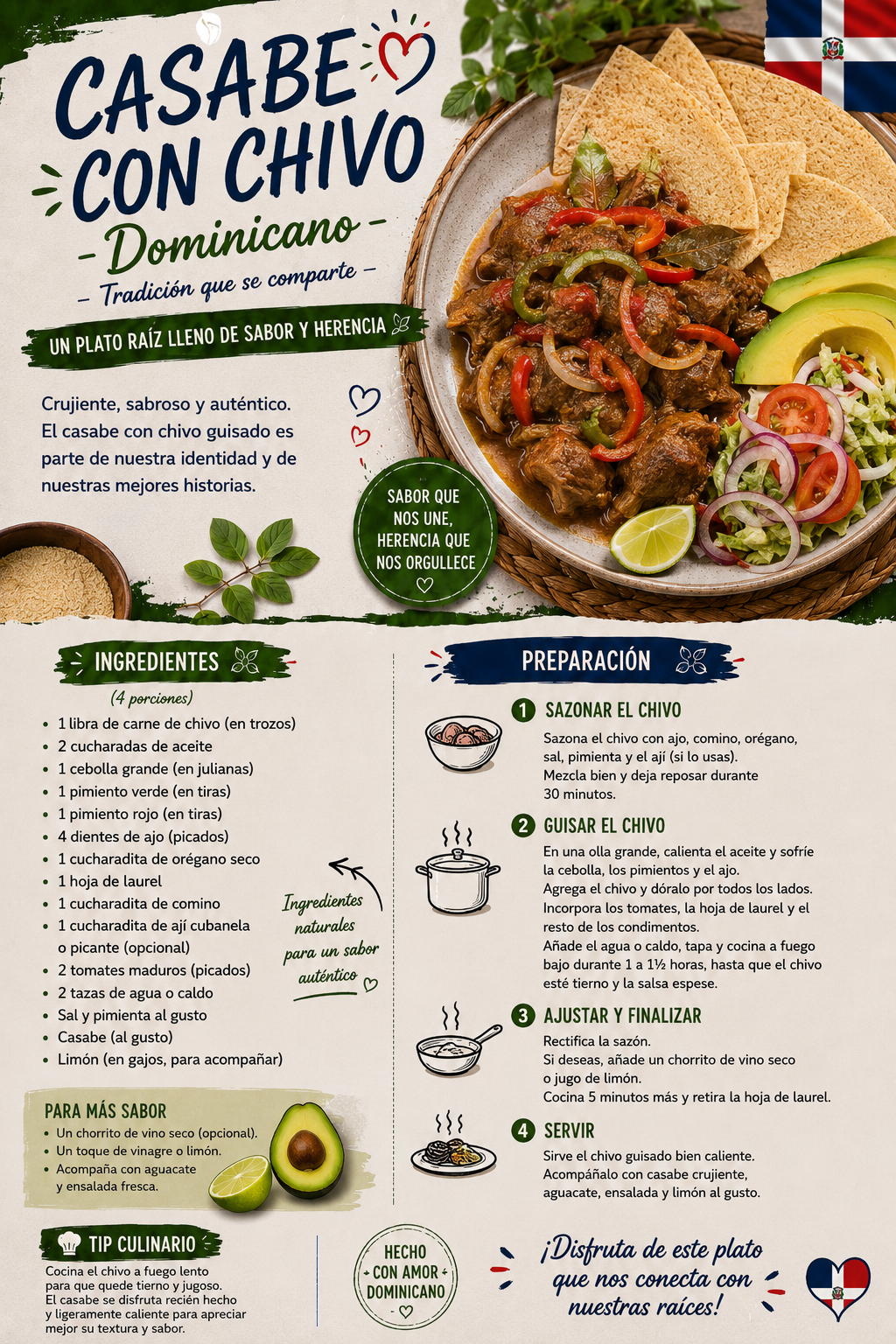
Casabe con guiso de chivo al estilo Dominicano

Ingredientes.

  • 1 libra de carne de cabra cortada en trozos
  • 2 cucharadas de aceite
  • 1 cebolla grande (Cortada en juliana)
  • 1 pimiento verde (cortado en tiras)
  • 1 pimiento rojo (cortado en tiras)
  • 4 dientes de ajo (picado)
  • 1 cucharadita de orégano seco
  • 1 hoja de laurel
  • 1 cucharadita de comino
  • 1 cucharadita de pimiento cubanela o chile picante (opcional)
  • 2 tomates maduros, (picado)
  • 2 tazas de agua o caldo
  • Sal y pimienta al gusto
  • Casabe al gusto
  • Rodajas de limón (para servir)

Preparación (Sazonar la carne de cabra)

  • Sazona la carne de cabra. con ajo, comino, orégano, sal, pimienta y chile (si se utiliza).
  • Mezcla bien y deja reposar durante 30 minutos.

Guisar la carne de Chivo

  • Calienta el aceite en una olla grande y sofríe la cebolla, los pimientos y el ajo.
  •  Añada la carne de chivo y dórela uniformemente por todos lados.
  •  Incorpora removiendo los tomates picados, la hoja de laurel y el resto de los condimentos.
  • Vierte el agua o el caldo, tapa la olla y cocina a fuego lento durante 1 a 1 hora y media, hasta que la carne esté tierna y la salsa haya espesado.

Ajustar y finalizar

• Pruebe y ajuste la sazón con sal y pimienta si es necesario.
• Si lo desea, añada un chorrito de vino seco o de jugo de lima fresco.
• Cocine durante 5 minutos más y retire la hoja de laurel.

Servir

  • Sirva el guiso de chivo bien caliente.
  • Combínalo con pan de yuca crujiente ((al), rodajas de aguacate, una ensalada fresca y gajos de limón al gusto.
  • ¡Disfruta de un plato que nos conecta profundamente con nuestras raíces!

Para un sabor extra

• Un chorrito de vino seco (opcional).
• Un chorrito de vino o jugo de limón (opcional).
• Acompañe con aguacate en rebanadas y una ensalada fresca de la huerta.

Consejo culinario

Cocine la carne de cabra a fuego lento para asegurar que se mantenga tierna y jugosa. Pan de yuca ((al) se disfruta mejor fresco y ligeramente tibio para apreciar plenamente su textura y sabor únicos.

Somos distribuidores de productos hispanos para su negocio.

Somos distribuidores de productos hispanos para su negocio.

Contáctanos

Horario de trabajo

Created with ♥ by 3tree digital

Dominican Stewed Chicken.

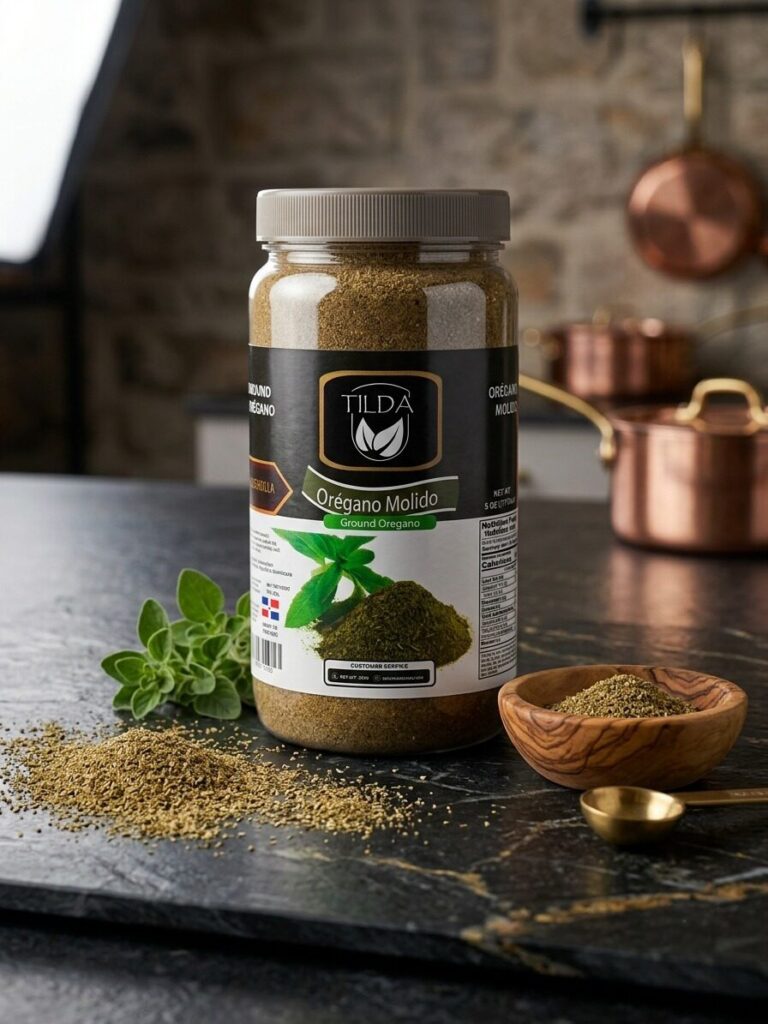
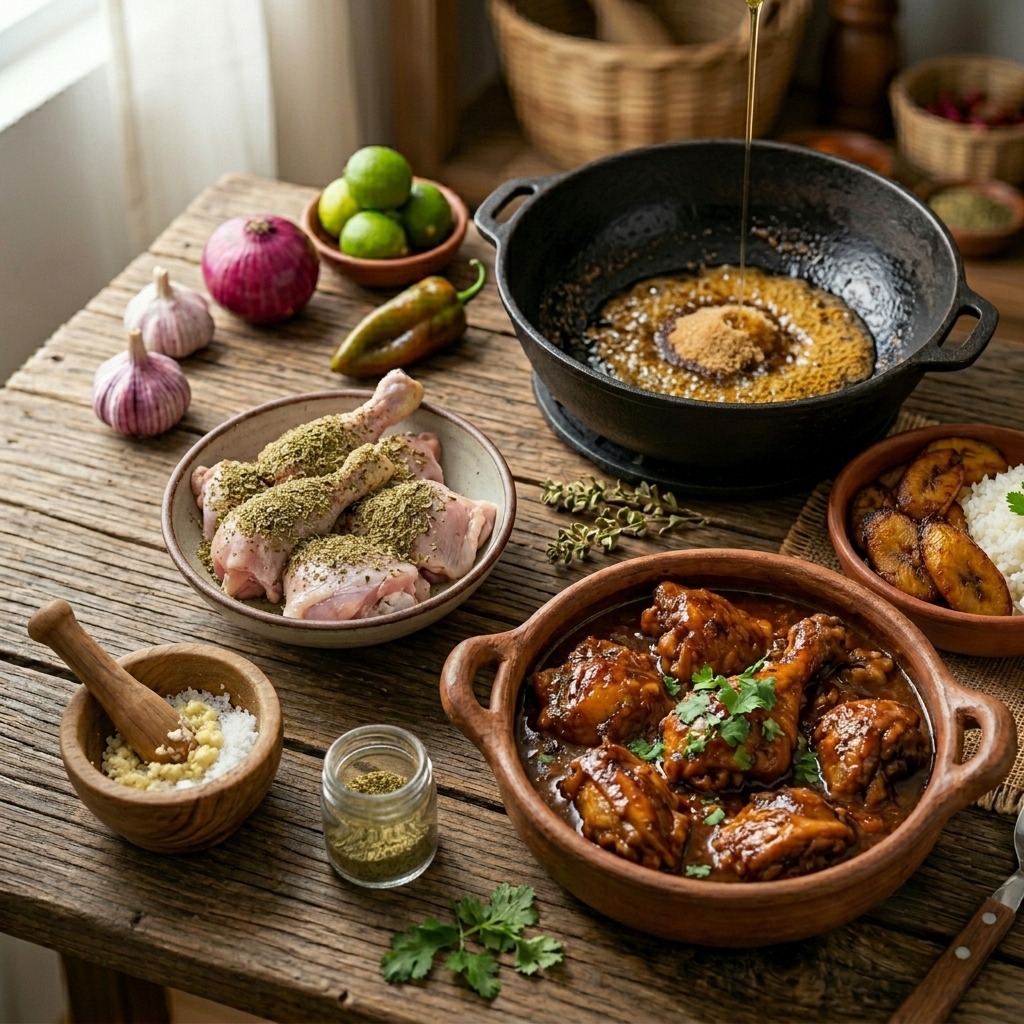
(Creole Seasoning) Stewed chicken is the daily lunch in any Dominican home. The characteristic touch that sets the Dominican stew apart from others in the region is the dominance of dried oregano rubbed in the hands right before cooking.

Ingredientes clave:

• 2 a 3 libras de pollo cortado en trozos.
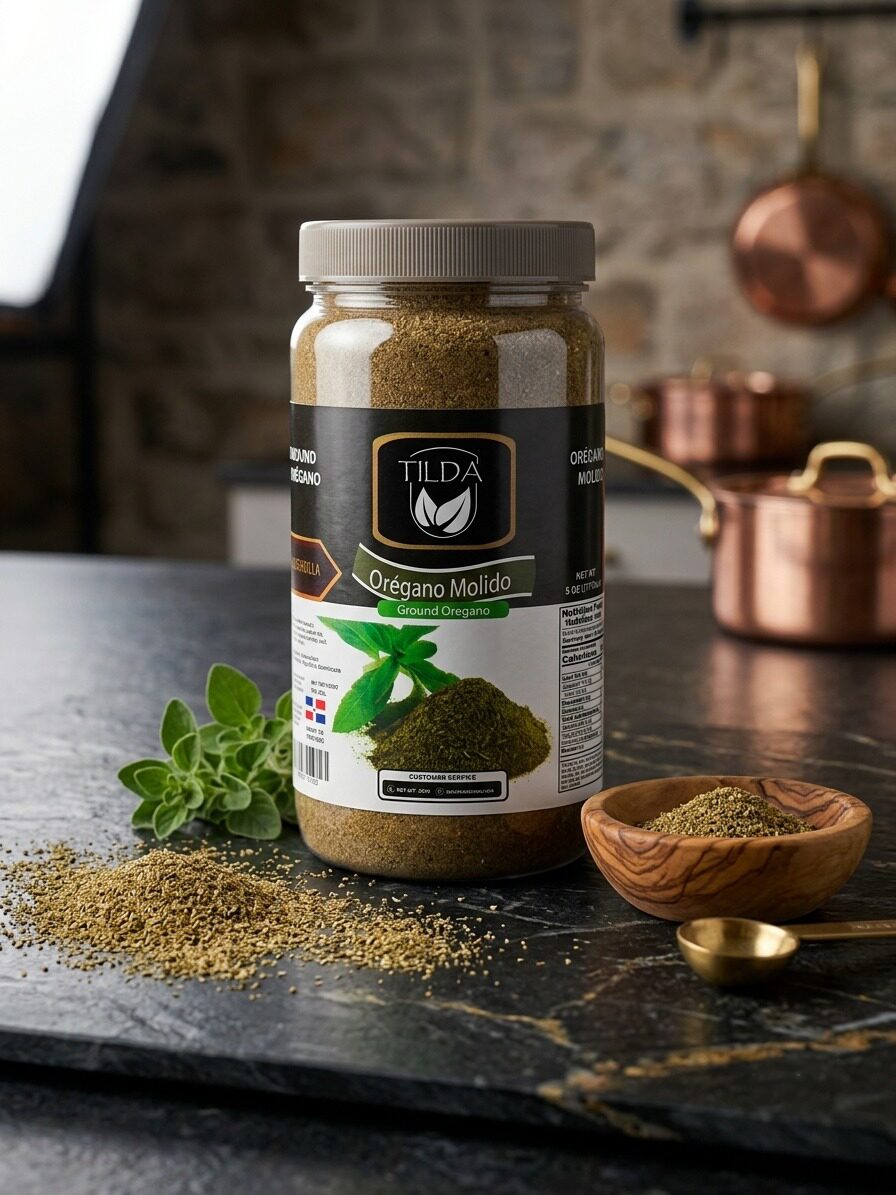
• 1 ½ cucharadas de orégano dominicano seco.
• 1 cebolla morada y 1 pimiento verde (o pimiento cubanela), picados.
• 4 dientes de ajo, picados. Jugo de 1 lima o naranja amarga.
• 2 cucharadas de pasta de tomate. 1 cucharadita de azúcar y cilantro fresco.

Preparation:

Wash the chicken with the lime juice.
Season it by combining the garlic, salt, pepper, and most importantly, take the dried oregano in the palm of your hands and rub it over the chicken to crush it finely and activate its essential oils.
In a caldero (pot), add a splash of oil and the teaspoon of sugar. Let it caramelize until it turns a dark golden color (without letting it burn black). Add the chicken pieces.
 
vainilla

Dominican Vanilla Sponge Cake (Bizcocho Dominicano)

is a traditional dessert known for its soft, fluffy, and moist texture, infused with a delicate vanilla aroma. It is one of the most popular sweet treats for family gatherings, birthdays, and special occasions.

Ingredientes
• Wheat flour
• Butter
• Sugar
• Huevos
• Milk
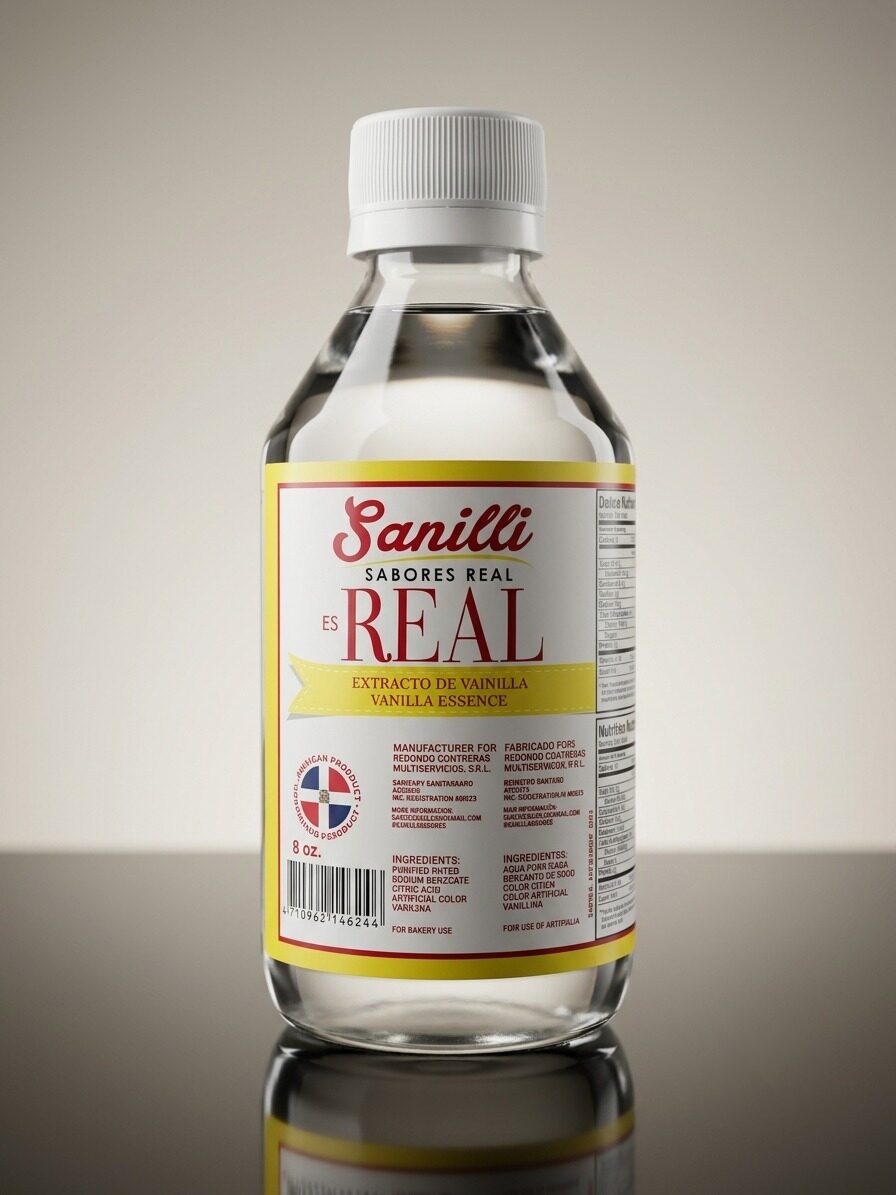
• Estracto de vainilla
• Baking powder
• Salt

Instrucciones paso a paso
• Pre-heat the oven to 350°F (175°C).
• Beat the butter and sugar together until the mixture is light and creamy.
• Add the eggs one by one, then stir in the vanilla extract.
• Fold in the flour, baking powder, and salt, alternating with the milk.
• Pour the batter into a previously greased cake pan.
• Bake for 40 to 50 minutes, or until a toothpick inserted into the center comes out clean.
• Let it cool completely before removing from the pan and serving.

Dominican Mangú with Cassava Bread, Fried Cheese, and Eggs

Ingredientes
• 4 green plantains
• 1 large cassava bread (casabe)
• 2 tbsp butter
• ½ cup milk or hot water
• 1 red onion, sliced
• 2 tbsp oil
• 1 cucharada de orégano seco
• 200 g frying cheese
• 4 eggs
• Avocado (optional, for serving)

Instrucciones paso a paso• Peel the green plantains and cut them into medium-sized chunks.
• Boil them in water with salt for 20 to 25 minutes, until they are completely tender.
• Drain the plantains and reserve a small amount of the starchy cooking water.
• Mash the plantains while they are still hot, gradually adding the butter and milk (or reserved cooking water) until you achieve a creamy purée.
• In a skillet, heat the oil and sauté the red onion until it is translucent and slightly golden.
• Fry the cheese until it forms a golden crust on the outside and stays soft on the inside.
• Cook the eggs to your preference (fried, scrambled, or boiled).
• Serve a generous portion of mangú, top it with the sautéed onions, and pair it with the fried cheese, eggs, and the cassava bread broken into pieces. If desired, add a few avocado slices to complete the dish.

Dominican Mangú with Cassava Bread, Fried Cheese, and Eggs

Ingredientes

• 4 green plantains
• 1 large cassava bread (casabe)
• 2 tbsp butter
• ½ cup milk or hot water
• 1 red onion, sliced
• 2 tbsp oil
• 1 cucharada de orégano seco
• 200 g frying cheese
• 4 eggs
• Avocado (optional, for serving)

Instrucciones paso a paso

• Peel the green plantains and cut them into medium-sized chunks.
• Boil them in water with salt for 20 to 25 minutes, until they are completely tender.
• Drain the plantains and reserve a small amount of the starchy cooking water.
• Mash the plantains while they are still hot, gradually adding the butter and milk (or reserved cooking water) until you achieve a creamy purée.
• In a skillet, heat the oil and sauté the red onion until it is translucent and slightly golden.
• Fry the cheese until it forms a golden crust on the outside and stays soft on the inside.
• Cook the eggs to your preference (fried, scrambled, or boiled).
• Serve a generous portion of mangú, top it with the sautéed onions, and pair it with the fried cheese, eggs, and the cassava bread broken into pieces. If desired, add a few avocado slices to complete the dish.

Pollo Guisado Dominicano

(Creole Seasoning) Stewed chicken is the daily lunch in any Dominican home. The characteristic touch that sets the Dominican stew apart from others in the region is the dominance of dried oregano rubbed in the hands right before cooking.

Ingredientes clave:

• 2 a 3 libras de pollo cortado en trozos.
• 1 ½ cucharadas de orégano dominicano seco.
• 1 cebolla morada y 1 pimiento verde (o pimiento cubanela), picados.
• 4 dientes de ajo, picados. Jugo de 1 lima o naranja amarga.
• 2 cucharadas de pasta de tomate. 1 cucharadita de azúcar y cilantro fresco.

Preparation:

Wash the chicken with the lime juice.
Season it by combining the garlic, salt, pepper, and most importantly, take the dried oregano in the palm of your hands and rub it over the chicken to crush it finely and activate its essential oils.
In a caldero (pot), add a splash of oil and the teaspoon of sugar. Let it caramelize until it turns a dark golden color (without letting it burn black). Add the chicken pieces.


Pollo Guisado Dominicano

(Creole Seasoning) Stewed chicken is the daily lunch in any Dominican home. The characteristic touch that sets the Dominican stew apart from others in the region is the dominance of dried oregano rubbed in the hands right before cooking.

Ingredientes clave:

• 2 a 3 libras de pollo cortado en trozos.
• 1 ½ cucharadas de orégano dominicano seco.
• 1 cebolla morada y 1 pimiento verde (o pimiento cubanela), picados.
• 4 dientes de ajo, picados. Jugo de 1 lima o naranja amarga.
• 2 cucharadas de pasta de tomate. 1 cucharadita de azúcar y cilantro fresco.

Preparation:

Wash the chicken with the lime juice.
Season it by combining the garlic, salt, pepper, and most importantly, take the dried oregano in the palm of your hands and rub it over the chicken to crush it finely and activate its essential oils.
In a caldero (pot), add a splash of oil and the teaspoon of sugar. Let it caramelize until it turns a dark golden color (without letting it burn black). Add the chicken pieces.


Dominican Vanilla Sponge Cake (Bizcocho Dominicano)

is a traditional dessert known for its soft, fluffy, and moist texture, infused with a delicate vanilla aroma. It is one of the most popular sweet treats for family gatherings, birthdays, and special occasions.

Ingredientes
• Wheat flour
• Butter
• Sugar
• Huevos
• Milk
• Estracto de vainilla
• Baking powder
• Salt

Instrucciones paso a paso
• Pre-heat the oven to 350°F (175°C).
• Beat the butter and sugar together until the mixture is light and creamy.
• Add the eggs one by one, then stir in the vanilla extract.
• Fold in the flour, baking powder, and salt, alternating with the milk.
• Pour the batter into a previously greased cake pan.
• Bake for 40 to 50 minutes, or until a toothpick inserted into the center comes out clean.
• Let it cool completely before removing from the pan and serving.

Dominican Vanilla Sponge Cake (Bizcocho Dominicano)

is a traditional dessert known for its soft, fluffy, and moist texture, infused with a delicate vanilla aroma. It is one of the most popular sweet treats for family gatherings, birthdays, and special occasions.

Ingredientes
• Wheat flour
• Butter
• Sugar
• Huevos
• Milk
• Estracto de vainilla
• Baking powder
• Salt

Instrucciones paso a paso
• Pre-heat the oven to 350°F (175°C).
• Beat the butter and sugar together until the mixture is light and creamy.
• Add the eggs one by one, then stir in the vanilla extract.
• Fold in the flour, baking powder, and salt, alternating with the milk.
• Pour the batter into a previously greased cake pan.
• Bake for 40 to 50 minutes, or until a toothpick inserted into the center comes out clean.
• Let it cool completely before removing from the pan and serving.

Dominican Mangú with Cassava Bread, Fried Cheese, and Eggs

Ingredientes
• 4 green plantains
• 1 large cassava bread (casabe)
• 2 tbsp butter
• ½ cup milk or hot water
• 1 red onion, sliced
• 2 tbsp oil
• 1 cucharada de orégano seco
• 200 g frying cheese
• 4 eggs
• Avocado (optional, for serving)

Instrucciones paso a paso

• Peel the green plantains and cut them into medium-sized chunks.
• Boil them in water with salt for 20 to 25 minutes, until they are completely tender.
• Drain the plantains and reserve a small amount of the starchy cooking water.
• Mash the plantains while they are still hot, gradually adding the butter and milk (or reserved cooking water) until you achieve a creamy purée.
• In a skillet, heat the oil and sauté the red onion until it is translucent and slightly golden.
• Fry the cheese until it forms a golden crust on the outside and stays soft on the inside.
• Cook the eggs to your preference (fried, scrambled, or boiled).
• Serve a generous portion of mangú, top it with the sautéed onions, and pair it with the fried cheese, eggs, and the cassava bread broken into pieces. If desired, add a few avocado slices to complete the dish.